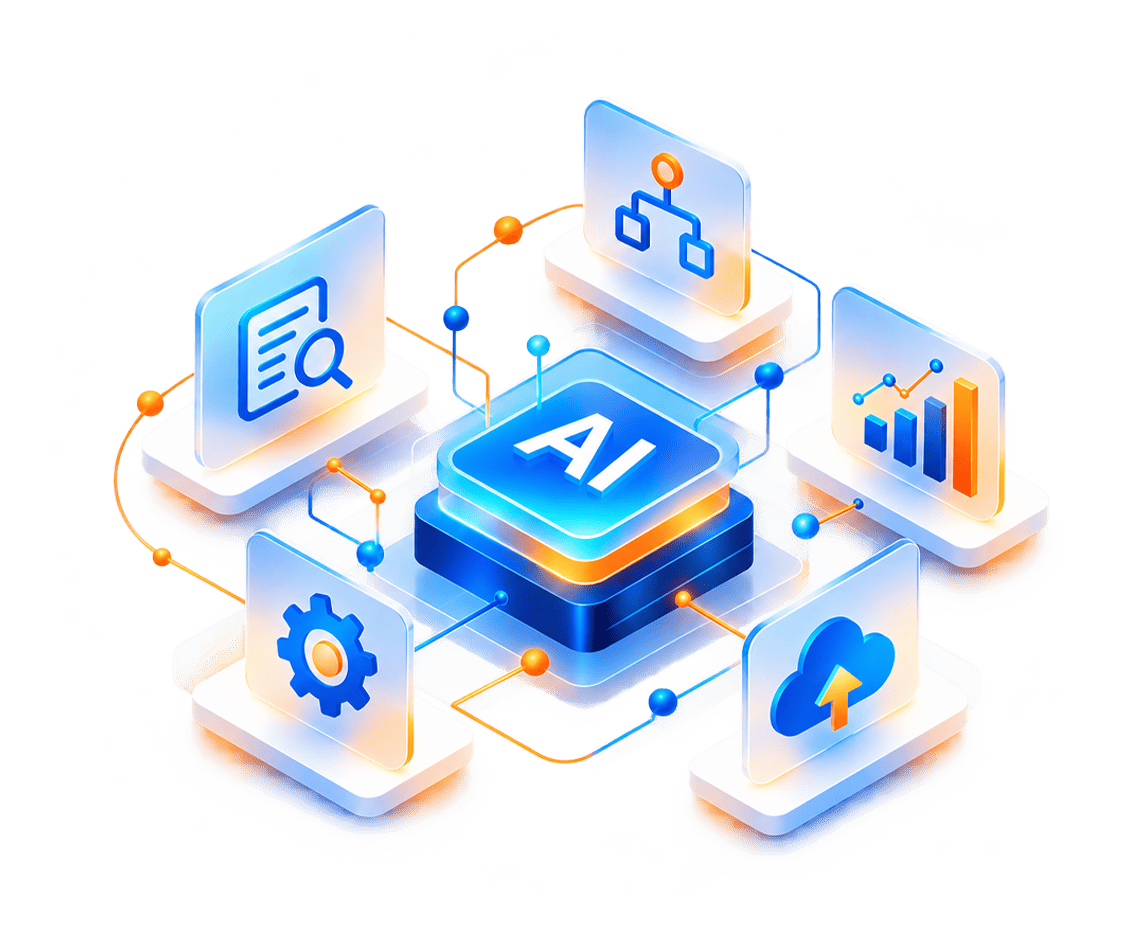
We deliver tailored Generative AI solutions built around your data, secured within your governance framework, and designed to meet defined cost targets. From proof of concept to enterprise-scale deployment, we ensure consistent, accurate, and measurable outcomes through ongoing evaluation and monitoring.
As a trusted provider of enterprise Generative AI solutions, we focus first on building the data and governance foundations that drive dependable results. Before introducing AI models, we implement robust retrieval frameworks, security controls, and evaluation mechanisms that ensure accuracy, transparency, and operational reliability. Leveraging deep expertise in data engineering and modern analytics platforms, we deliver AI systems designed for long-term business value.
From intelligent knowledge assistants in insurance and automated claims summarization in healthcare to AI-powered customer service copilots in retail, our solutions are built using your enterprise data and aligned with your governance requirements. Each implementation is customized to your industry and operational needs, ensuring sustained performance, compliance, and measurable outcomes from pilot through production.
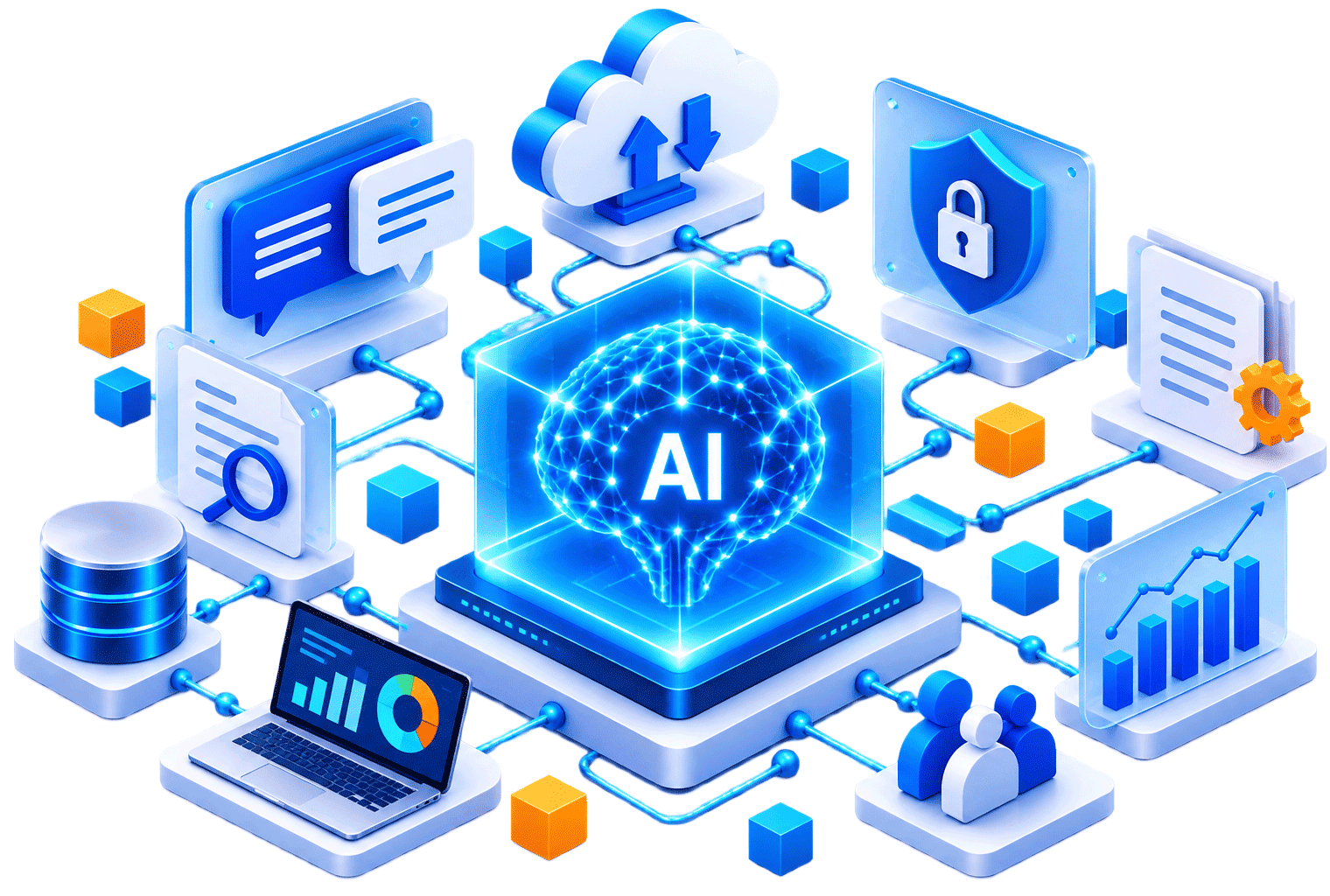
From strategy and implementation to production operations and continuous support, one dedicated team oversees the complete journey, supported by specialists in AI, machine learning, data engineering, and enterprise model development.
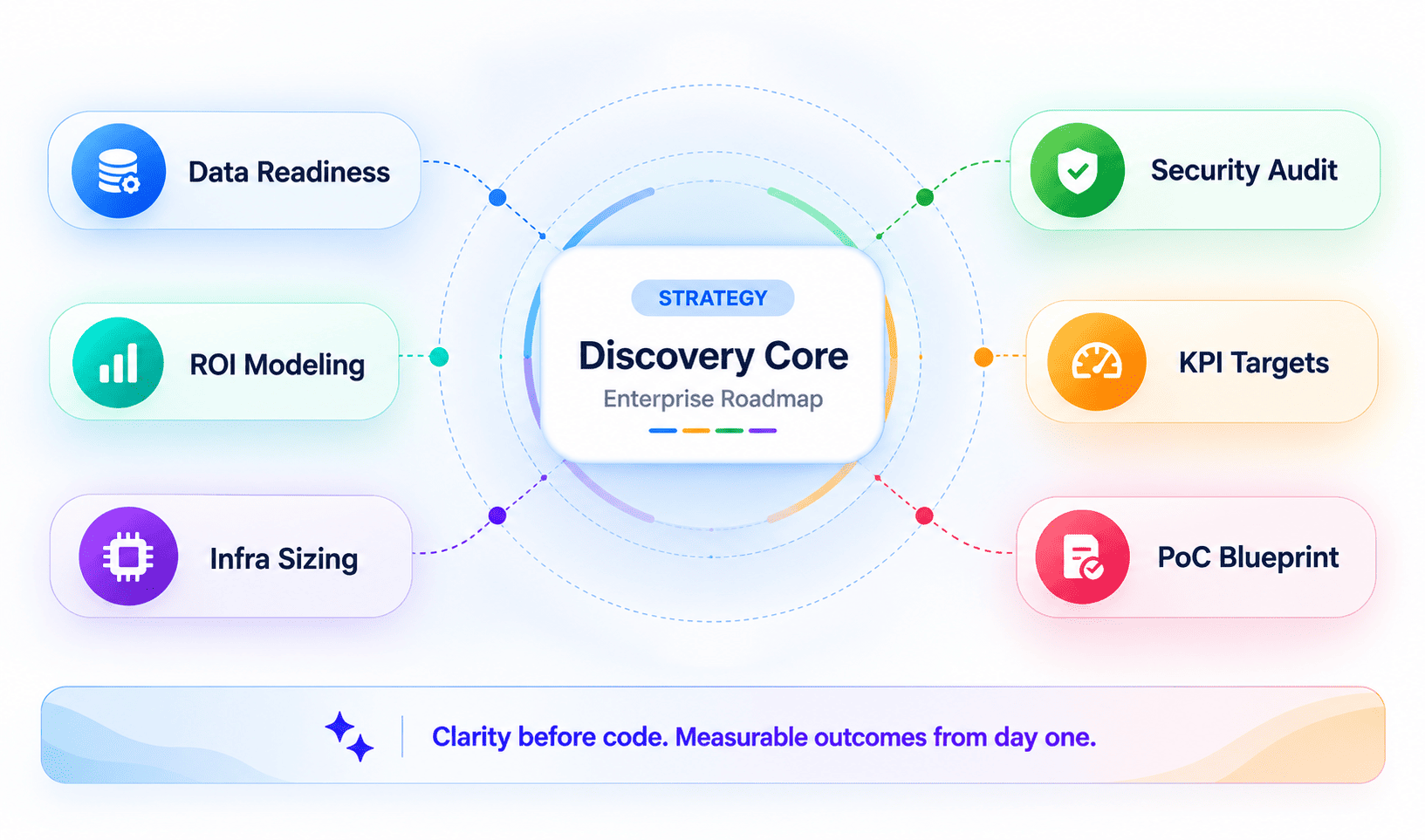
We assess where Generative AI can deliver meaningful business value—and provide clear guidance on where it may not be the right fit.
Evaluate technical feasibility and organizational readiness across your data, systems, and workflows.
Identify, assess, and prioritize high-value GenAI use cases tailored to business ROI.
Define measurable success criteria, performance benchmarks, and accuracy targets before development begins.
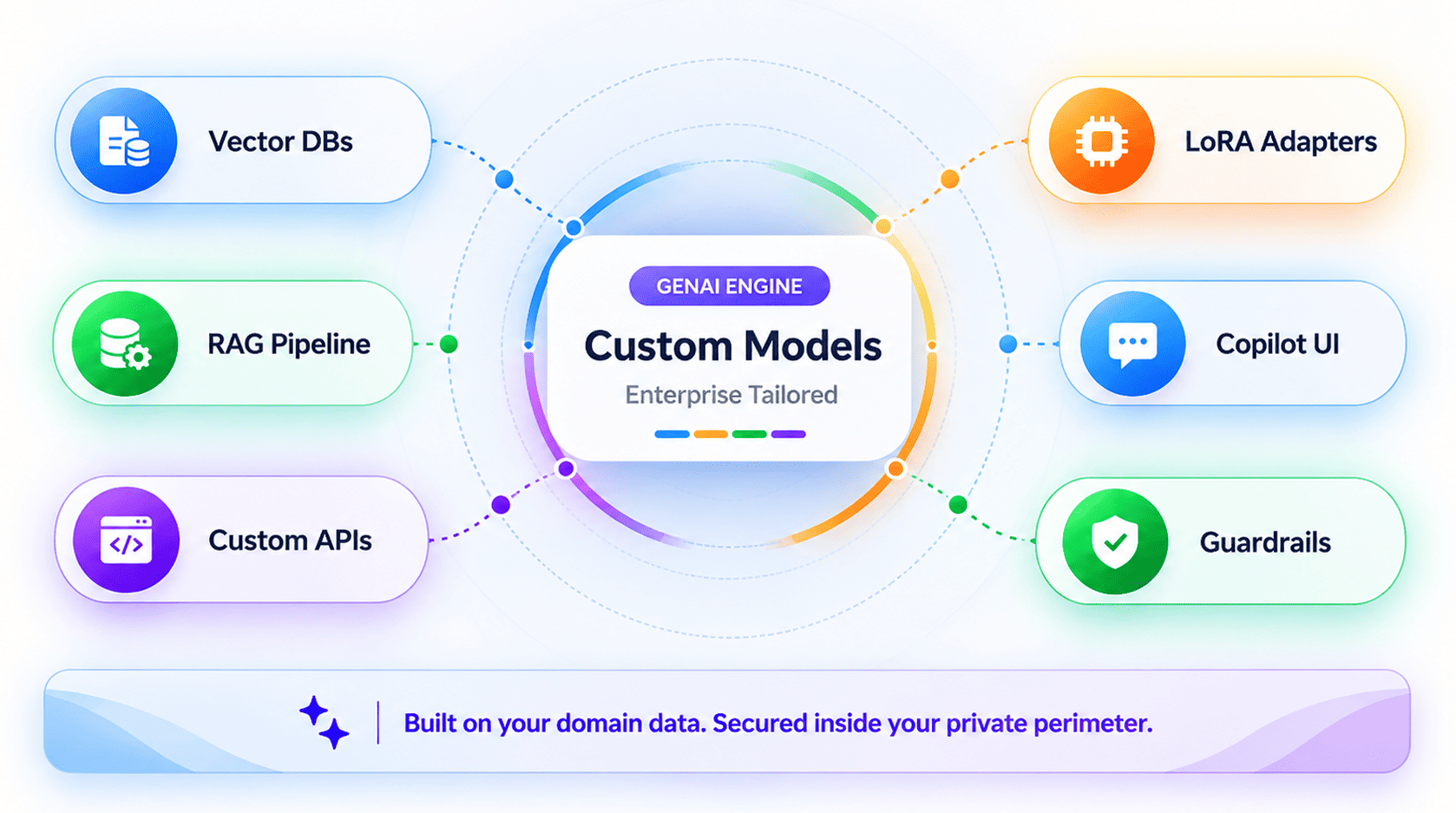
We develop enterprise-grade GenAI solutions using your proprietary data, domain knowledge, and technology environment—not one-size-fits-all implementations.
Design RAG and context-aware architectures using your proprietary knowledge sources.
Apply fine-tuning and adapter-based training when specialized domain language requires it.
Build intelligent copilots, conversational interfaces, and automated document synthesis engines.
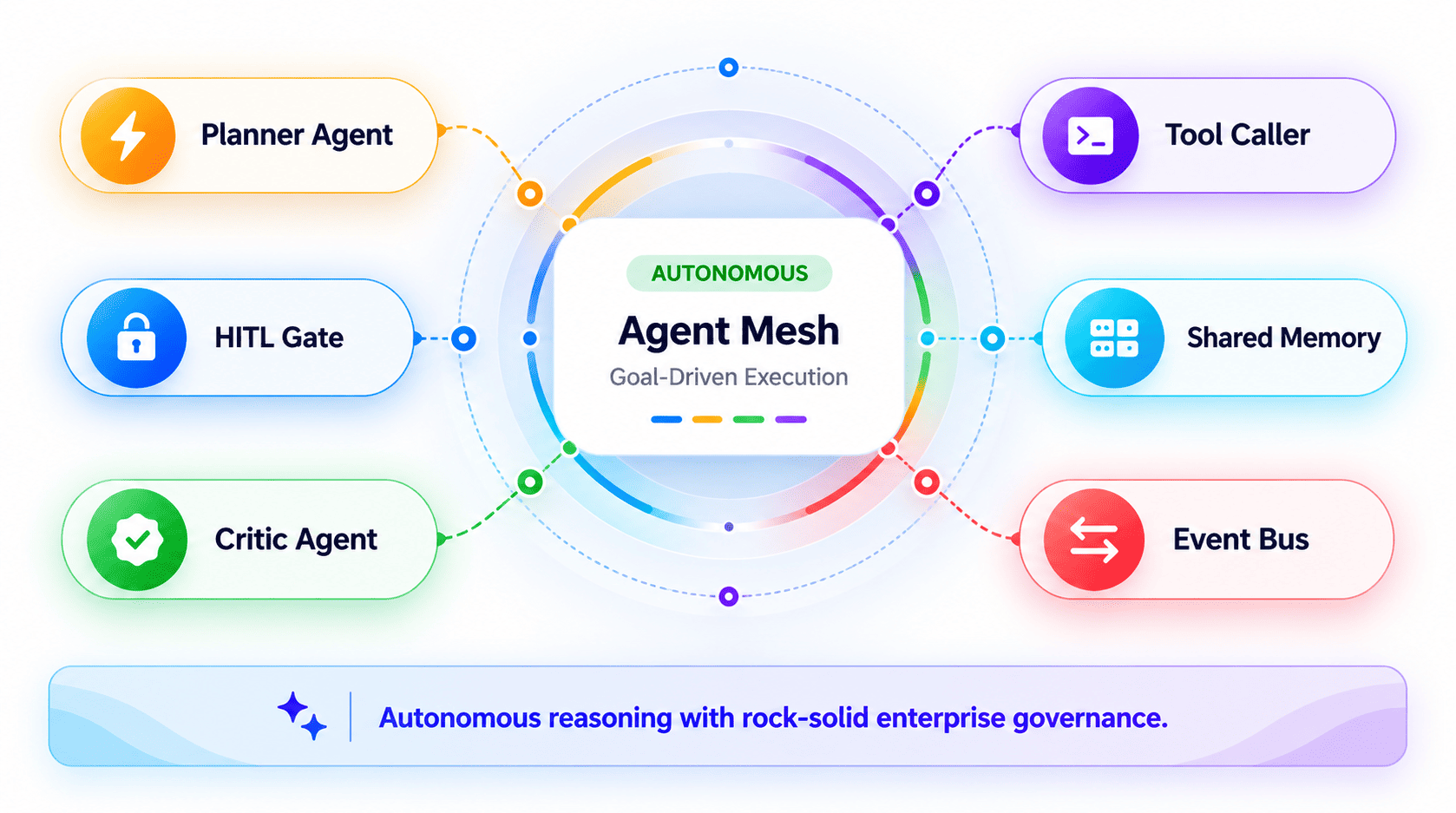
Designing AI agents that can plan and execute multi-step workflows while maintaining human oversight at critical decision points.
Agent architecture, hierarchical reasoning, state management, and tool integration.
Autonomous cross-system execution across enterprise databases, ERP, and CRMs.
Clearly defined permissions, guardrails, and human-in-the-loop checkpoints.
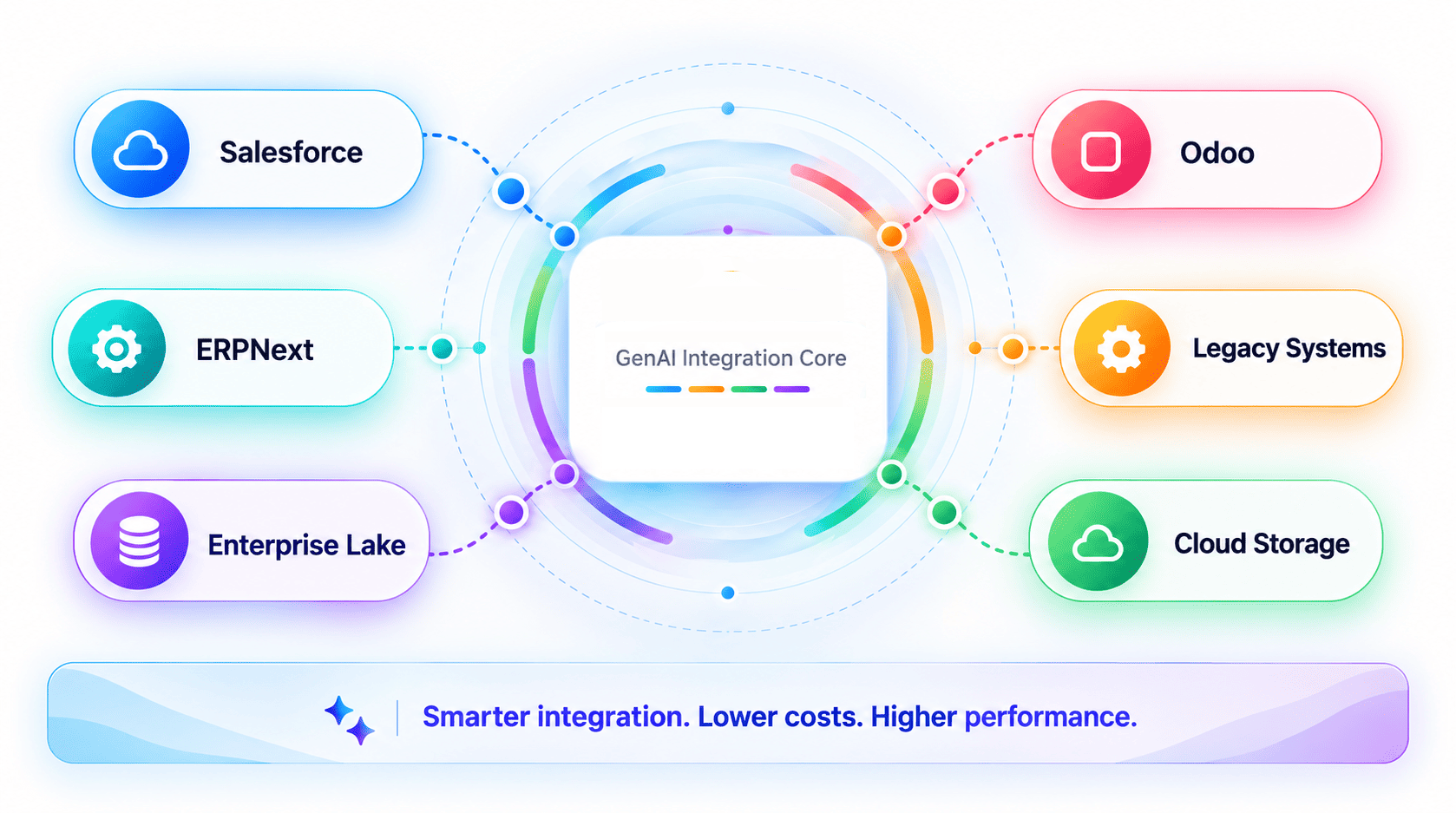
We embed Generative AI into your existing technology landscape while continuously optimizing performance, scalability, and operational costs as adoption grows.
Integrate with Salesforce, ERPNext, Odoo, and proprietary enterprise applications.
Inherit and enforce existing permissions and access controls from source systems.
Apply intelligent model routing, semantic caching, and context optimization to manage AI costs at scale.
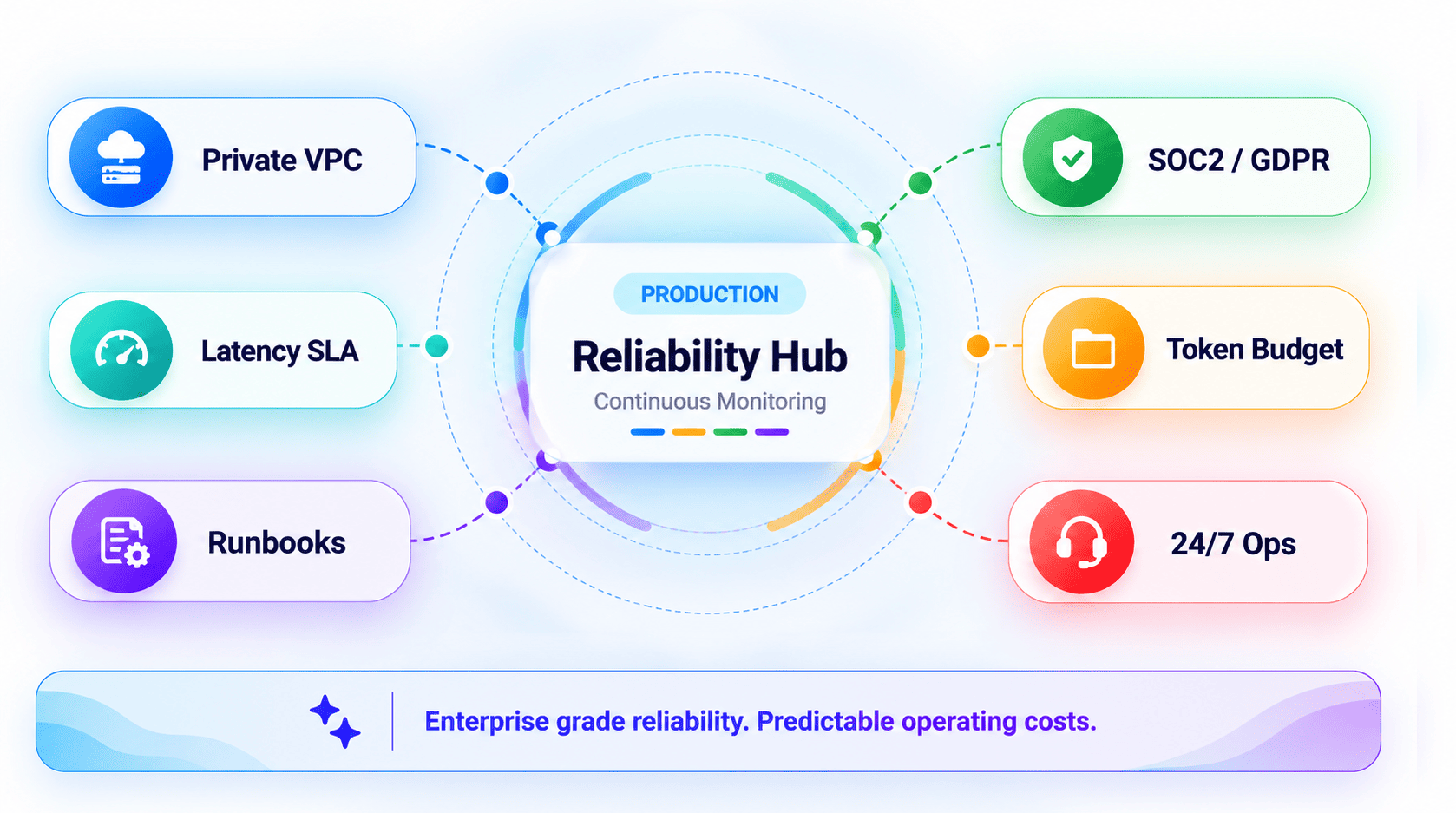
We ensure every GenAI solution is thoroughly evaluated before release, continuously monitored in production, and supported with the knowledge and documentation your teams need.
Integrate automated evaluation into every release to validate output quality before deployment.
Monitor model performance, semantic drift, response latency, token usage, and cost per interaction.
Support secure deployment across private cloud, VPC, and on-premises environments with full knowledge transfer.
Our Generative AI development approach is designed to deliver reliable, accurate performance at production scale—not just a successful proof of concept.
We begin by evaluating your data, systems, workflows, and desired business outcomes before defining the right approach. We also identify scenarios where Generative AI may not be the best solution, recommending traditional search, rules-based automation, or other alternatives when they are more effective and cost-efficient.
We design the retrieval architecture and select models based on your required accuracy, response time, scalability, and cost objectives. As part of our Generative AI development services, we benchmark multiple model and architecture options against your own data before selecting the optimal configuration.
We establish a golden set of representative questions and validate it with your subject matter experts before development begins. This creates objective quality benchmarks instead of relying solely on subjective assessments, making evaluation an integral part of the Generative AI development lifecycle.
We work in focused, iterative development cycles, continuously optimizing retrieval and generation independently to improve overall performance. Technologies such as LangChain, LlamaIndex, and purpose-built AI pipelines are selected based on the specific requirements of each project rather than following a one-size-fits-all approach.
We take solutions into production with continuous monitoring of model performance, drift, latency, usage, and operational costs. Our Generative AI development and deployment approach integrates evaluation into the CI pipeline, ensuring that changes to prompts, models, or workflows are validated against established benchmarks before reaching production.

Six high-impact areas where our Generative AI solutions are helping organizations transform the way teams work—selected for their potential to deliver measurable business outcomes, not simply impressive demonstrations.
We leverage industry-leading tools and technologies to build intelligent, scalable, and secure AI solutions tailored to your business needs.
State-of-the-art foundation models for powerful and flexible AI applications.
High-performance vector storage and indexing for semantic knowledge retrieval.
Dynamic agent chaining, multi-step execution, and stateful memory coordination.
Automated testing, benchmark verification, hallucination detection, and guardrails.
Enterprise-grade low-latency inference runtimes, container orchestration, and cloud clusters.
Scalable data processing pipelines, distributed lakehouses, and real-time event streaming.